

Climate Change & The Imperative for Resilient Roads in LMICs
September 30th @ 10:00 AM –
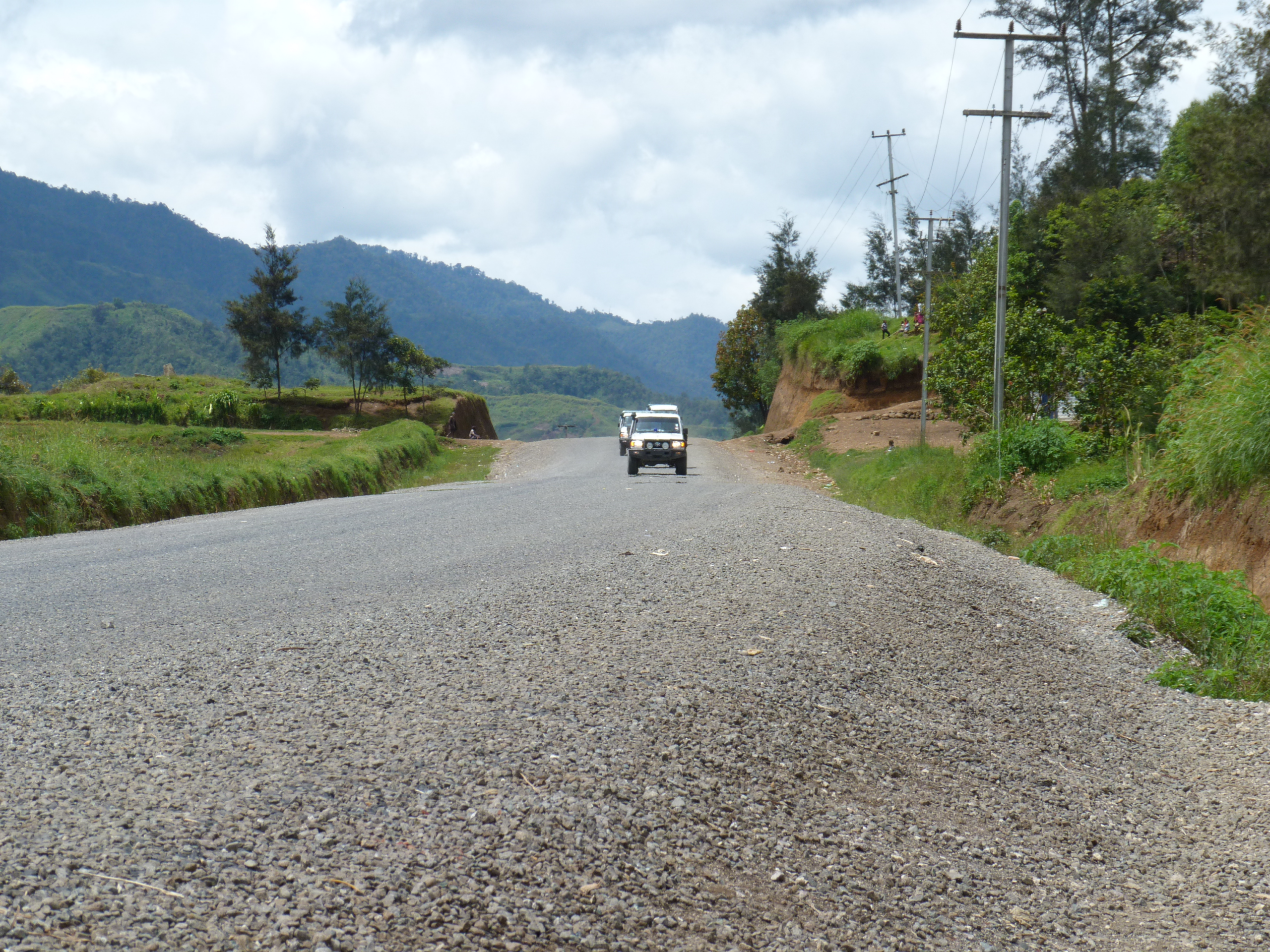
Establishes the foundational case for the series: the implications of climate change for road networks in developing nations, the economic and social cost of inaction, the core principles of climate-resilient road design, and an introduction to adjusting design standards. Sets the intellectual frame for all subsequent sessions.
Part of the Roads to Resilience Webinar Series:
A five-session webinar series co-hosted by AnyWay Solutions with the World Bank and the International Road Federation (IRF Global), offering practical guidance on building climate resilience into road infrastructure in developing countries. The series spans the full spectrum of resilience practice, from policy and economics through drainage, slope stability, materials, data, and rehabilitation.
SPEAKERS:
Zeevik Halber – Chief Executive Officer, AnyWay Solutions
Zeevik was appointed CEO of AnyWay Solid Environmental Solutions in 2004 and has since led the company’s development from a regional business into a multinational enterprise and world expert on Climate Resiliency for Transport Infrastructure. Senior executive responsible for management of the AnyWay group of companies, and General Manager of several of the AnyWay companies in various countries. Through long-term involvement at the management level of the Metrontario Group of Companies, has gained multinational, multidisciplinary experience managing large-scale businesses. Experienced in government relations at the highest levels and in the operation and growth of a wide variety of businesses at every stage of development.
Alex Campbell – Senior Transportation Specialist
Alex Campbell has over two decades of international experience across Africa, the Caribbean, the Middle East, and the Asia-Pacific. Alex has led multidisciplinary teams in planning, designing, and delivering strategic road, bridge, and transport corridor projects in some of the world’s most challenging environments. His expertise spans geotechnical and pavement engineering, drainage and flood-resilience design, and the use of advanced data analytics and remote sensing to optimize infrastructure performance under changing climate conditions. Throughout his career, Alex has been instrumental in implementing practical, cost-effective solutions tailored to the realities of developing regions. He has worked extensively with government ministries, multilateral agencies, and private contractors to design and implement infrastructure that balances engineering excellence with socio-economic sustainability. In Papua New Guinea, Alex has served as a long-term technical consultant to the Department of Works & Highways, spearheading the development of national standards and climate-resilient rehabilitation strategies for major corridors such as the Highlands Highway.
Gordon Keller – Geotechnical Engineer
Mr. Keller is a licensed Civil and Geotechnical Engineer in California. He received a BS in Civil Engineering from UCLA in 1968, and then an MS in Geotechnical Engineering from the University of California, Berkeley in 1972. He has worked with the U.S. Forest Service for over 40 years and is currently retired, but continues working as a private engineering consultant. Professional experience has included extensive work with low-volume roads, slope stability, retaining structures, drainage, materials source development, and bridges and dams. Professional experience has included conducting over 50 Low-Volume Roads Engineering Best Practices lectures and training courses worldwide over the past 20 years. Project experience has included storm damage repair work in the United States and Central America. Rural roads design and environmental analysis training courses have been presented throughout Latin America, Haiti, Africa, Australia, China, India, Nepal, and the Western Pacific, working for the World Bank, IADB, International Road Federation, US Agency for International Development, Brazilian Forest Service, Mexican Transportation Institute, VicForests, India National Institute of Technology, and other groups. He is involved with the Transportation Research Board Low-Volume Roads Committee, International Erosion Control Association (IECA), American Society of Civil Engineers (ASCE), International Roads Federation, US Forest Service Office of International Programs, and a variety of other agencies and Universities. He has published numerous papers on various aspects of Geotechnical and Geologic Engineering, as well as manuals on Minimum Impact Low-Volume Roads Engineering Best Practices, Storm Damage Risk Reduction, and Climate Resilient Low-Volume Roads.