Feasibility Study and Route Alignment Optimization

Feasibility Study and Route Alignment Optimization

The Department of Works & Highways (DOWH) - Papua New Guinea

Project Objective:​

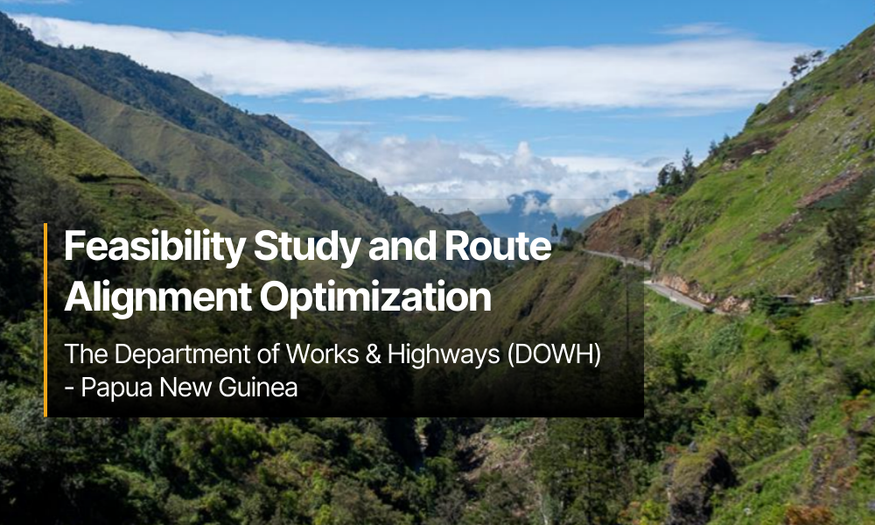
The government of Papua New Guinea initiated a program to support the development of rural agricultural areas by improving their connectivity to major roads and regional towns. A central focus of the program is to identify feasible road routes in remote areas of the country with challenging terrain, analyzing conditions and estimating costs for future developments.  

This particular study aimed to determine the most efficient route from Kundiawa, the main town in Jiwaka Province, through Gumine and onward to Karamui. To achieve this, a satellite-based and AI-assisted analysis was conducted to evaluate multiple potential alignments. Each route was assessed based on factors such as cut-and-fill requirements, ease of construction, total length, number of bridges and complex culverts, long-term maintainability, and the population residing along the route. 

This data-driven approach enabled a comprehensive comparison of alternatives, guiding the selection of the most viable option for future development. 

The Challenge

The complex terrain and limited accessibility of the area project area presented significant obstacles for the Department of Works and Highways (DOWH). The remoteness of the region made it it extremely difficult to conduct a traditional feasibility study, collect actionable data, analyze site conditions, and identify optimal routes for future road connections to the agricultural areas of Karamui.  

Given that the program intended to support the development of remote rural areas, timely delivering was critical. However, using conventional, ground-based surveying and data collection methods was not feasible. To move forward, a different approach was required that would help overcome the logistical and environmental challenges that would assist the government in relatively short time frame.  

Our Role

A preliminary evaluation of the various routes was required prior to undertaking a more detailed, and costly, pavement design and route alignment optimization study. The feasibility study needed to assess the construction complexity of each route segment to support an informed decision on the most viable option for unlocking the agricultural potential of the region. 

To assess the potential routes, a 3 km corridor was created around the existing and proposed route locations. A custom Digital Terrain Model (DTM) was created for all corridors using high-definition satellite imagery, which was utilized to assess existing infrastructure and regional hydrology.  

Once the DTM was acquired, specialized civil engineering software integrating AI tools constrained according to the client’s design parameters was utilized. The AI tool uses algorithms to search in real-time for the most cost-effective routes. Once an optimal route was identified, the corridor was defined. Further patented algorithms are then used to determine the most cost-effective profile within the design parameters. 

This phase also involved acquiring high-resolution (>1m per pixel) geo-referenced stereo imagery. Images were captured using forward, nadir and backward satellite images of the designated areas ensuring tht each point on the terrain was viewed from multiple perspectives. This stereo acquisition mode enabled the generation of Digital Elevation Models (DEMs) through stereo matching techniques.  

Once the DEM was developed, digital drainage channels were mapped across the terrain and overlaid onto the road corridor. where the channels intersected, the catchment area was calculated. The data was then used to estimate peak discharge for a given return period. Although rainfall and stream data in the area are not available or accurate to the current regional climate, the Papua New Guinea Flood Estimation Guidelines from August 2018 provided methodologies and formulas for peak discharge calculations even with limited data.  

To ensure that infrastructure investment delivers maximum benefit, it was essential to evaluate the potential socioeconomic impact of each route. Artificial Intelligence algorithms were used to identify structures (eg: rooftops) within each corridor and assess the communities directly within the vicinity of the new routes. The algorithm reports accuracy of up to 90%. 

The Results

The most efficient route between Kundiawa to Karamui was optimized with the goal of opening up the region for agricultural development. Multiple route options were analyzed using cut-and-fill analysis, evaluating ease of construction, length, number of bridges and complex culverts, maintainability, and the population along the route. A recommendation was made for a new alignment that uses some of the existing road, but deviates to create shallower slopes and better lines of sight. The recommended alternative routing from Kundiawa to Gumine is 5km shorter and has 36% less horizontal curves within the realigned segment. However, the benefits from the improvements must be weighed against the cost and complexity of establishing a new right of way.  

Additionally, it is recommended to expand the area of investigation for the eastern route alignment South and East toward Naiyo and Wario, as this might also significantly reduce the cost of construction if the eastern route. Beyond the design considerations of the two routes, the western route services 226 structures within communities (e.g. houses), while the eastern route services 4827 structures within communities. As such, the eastern route will service a greater population in the region and provide greater support for regional development.  

A further recommendation was made to conduct a more detailed design assessment, incorporating factors such as slope stability, materials availability, geological considerations, and refined hydrological factors to ensure that the route is one that provides the level of service that the region requires, and without creating a long-term maintenance and rehabilitation legacy.

Added value from AnyWay Solutions 

AnyWay’s use of satellite-based earth observation, combined with AI-driven route analysis, advanced flood modeling, and catchment area assessments, played a key role in evaluating the feasibility and optimizing the alignment of the proposed road. 

Through this optimization process, it became clear that a new alignment that partially follows the existing road but deviates to achieve shallower slopes and improved visibility, would offer significant advantages in terms of safety, constructability, and long-term performance. 

As a result, we were able to recommend alternative routes that better align with the project’s long-term development goals and improve connectivity of communities in the area. 
Enga Highway Impact Assessment: Overcoming the Challenges of Manual Data Collection 

Enga Highway Impact Assessment: Overcoming the Challenges of Manual Data Collection

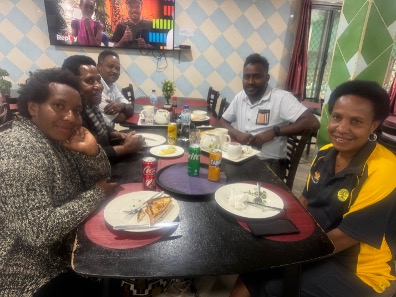
Figure 1: Meeting with the survey data collection team in Wabag, with productive discussions in preparation for the field data collection. 
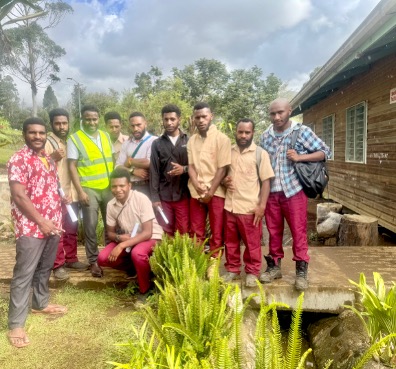
Figure 2: Group photo with Pawssa High School students During interviews and data collection in Enga Province. 
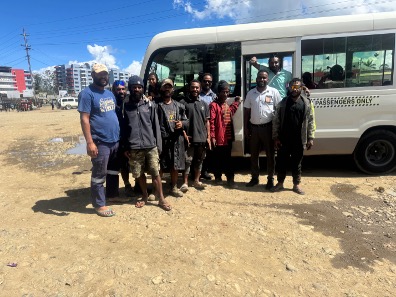
Figure 3: Group photo with bus drivers and support crew during interviews and data collection in Mount Hagen, Western Highlands Province. 

Enga Highway Impact Assessment

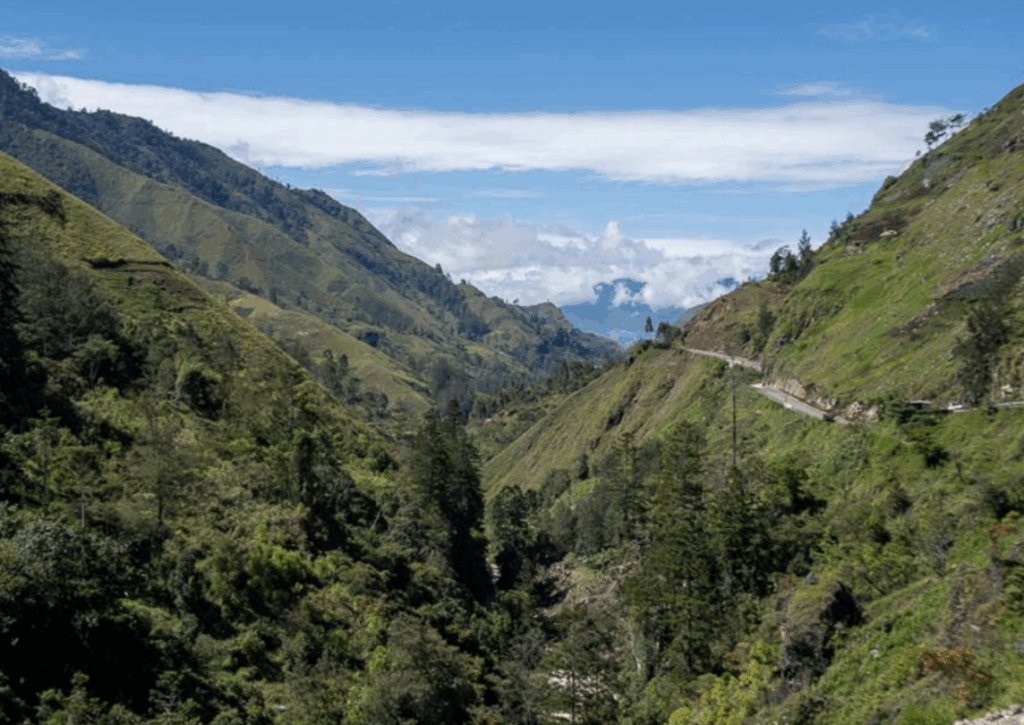
The Enga Highway Impact Assessment project is a collaborative initiative between AnyWay Solutions and Rural Senses, designed at evaluating the environmental, social, and economic impact of transportation infrastructure along Papua New Guinea’s Enga Highway corridor. By integrating community-centered impact evaluation with AI-enhanced analysis, the project assesses real-world outcomes aligned with the UN Sustainable Development Goals.

Learn more here: https://anywaysolutions.com/rural-senses-impact-assessment-building-a-theory-of-change/ 

Understanding Impact Beyond the Numbers 
Investments in infrastructure now can help regions to capitalize and prepare for population growth. Instead of rebuilding roads using difficult-to-procure, expensive materials, rehabilitation is often a good solution to improve road networks with less time and capital investments. Rehabilitation of highly distressed roads using recycling and stabilization can be an effective long-term strategy for pavement performance to withstand rigorous climate impacts. Lifecycle costs are minimized using this method as it is less costly to pay for the maintenance and upkeep of rehabilitated roads.  

While Earth Observation (EO) and satellite analytics provide valuable quantitative data, they cannot fully capture the lived experiences of communities. To understand changes in livelihoods, access to services, and public perception, we rely on in-depth, qualitative, on-the-ground data collection. 

In our latest phase, we engaged with communities along the Enga Highway, interviewing farmers, transport operators, students, and local organizations. Each survey question is tied to specific indicators that allow us to track and measure real-world change. 

As we continue collecting data, our understanding of the highway’s impact becomes clearer and more evidence-based, transitioning from initial insights to verified results. 

Key Challenges and How We Overcame Them 

Conducting large-scale qualitative research in remote areas brings unique logistical and operational hurdles. Here’s how we addressed them: 

1. Translation of Interviews 

Out of the 3,888 scheduled interviews, 790 require transcription and translation from Tok Pisin to English. While an internal team member leads this task, we’ve also engaged local translation experts to ensure cultural and linguistic nuances are preserved—crucial for accurate analysis and integration with EO data. 

2. Limited Access to Government Records 

Key official records such as traffic counts, maintenance logs, and economic data were often unavailable due to weak documentation systems and staff unavailability. To bridge this gap, we triangulated insights from community interviews and local leaders, helping us validate trends and timelines in the absence of formal data. 

3. Staffing and Connectivity Issues in Wabag 

Poor network connectivity and reliance on part-time field assistants in Wabag disrupted coordination and slowed progress. In response, we embedded a full-time AnyWay Solutions team member on-site to improve supervision, communication, and data quality. During this process, we experienced many on-the-ground challenges of largescale qualitative data gathering in a remote setting and have adapted to strengthen rigor and reliability. 

Strengthening Credibility Through Human-Centered Data 

With the continued support of Rural Senses, we’re addressing linguistic, institutional, and logistical barriers to ensure a high-quality, community-informed impact assessment. This work is about listening to local voices and making them a core part of the evaluation. By integrating first-hand narratives with satellite imagery and structured indicators, we’re building a multidimensional understanding of how infrastructure affects people’s lives. Our shared goal remains: Human-Centered AI—using technology to amplify, not replace, the voices of communities. 

Manila’s Monsoon Meltdown: Time for Resilience and Innovation


Manila's Monsoon Meltdown: Time for Resilience and Innovation

Yesterday, intense Habagat (Southwest Monsoon) rains transformed Manila’s roads into rivers—again, highlighting a growing pattern: Metro Manila is increasingly overwhelmed by more frequent and extreme rainfall. (YouTube).

The Philippines climate metrics—temperature rises, sea-level acceleration, outbreak of heatwaves, and cyclone frequency—not only highlight the escalating challenge but also underline the urgent need for adaptive, data-driven infrastructure solutions for transportation, urban planning, and public safety.

Why it matters:
Every dollar invested in adaptation today can avert multiple losses tomorrow. The Philippines could avoid up to 4% of GDP loss by 2100 with smart adaptation investments. And while national programs like the People’s Survival Fund and Ecotown strategies exist, they need agile, tech-driven partners.

It’s time for data-driven action – to protect communities and keep cities moving, even under pressure.

At AnyWay Solutions, we specialize in climate-resilient transport infrastructure. Our approach blends cutting-edge technology with deep engineering expertise to help cities adapt, recover, and thrive.

  • We use Earth Observation and AI to assess risks and inform smarter planning
  • We integrate digital tools and real-time data into asset management.
  • We support sustainable, low-carbon materials and resilient road designs
    And we work with local and international partners to scale impact where it’s needed most.

Makipagtulungan tayo para sa mas ligtas, matibay, at matalino na imprastruktura para sa susunod na henerasyon.

(Let’s work together for safer, stronger, and smarter infrastructure for the next generation)

Rural Senses Impact Assessment: Measuring real-world impact using Earth Observation technology

Enga Highway Impact Assessment: Measuring real-world impact using Earth Observation technology

As part of our ongoing commitment to building sustainable, climate-resilient transport infrastructure, AnyWay Solutions has partnered with Rural Senses—an AI-powered platform for community-centered impact evaluation. 


This collaboration represents a pivotal step in measuring and enhancing the real-world impact of our projects in alignment with the United Nations Sustainable Development Goals (SDGs). By integrating Rural Senses’ participatory and data-driven methodologies, we are assessing the environmental, social, and economic benefits of our work more effectively.  

We are using the Rural Senses technology to assess the impacts of our work on the communities surrounding the Enga Highway where AnyWay’s climate resilient design and engineering solutions have played a key role in the highway’s rehabilitation and upgrade.

Using Earth Observation to Measure Real-World Impact

In this phase of the study, the evaluation uses mixed methods, leveraging Earth Observation (EO) data to complement the traditional process of in-person surveys used to understand communities’ needs and perceptions.  Through this process we can create a richer, more objective view of long-term development impact on the region, related to the work we have been involved in upgrading the highway. In doing so, we combine local insights from community engagement tools with our geospatial analytics and engineering expertise to track the actual impact on the surrounding areas.

EO as a Tool for Measuring Community / Economic Growth

Using  earth observation , we analyzed changes along the corridor of the Enga Highway, a 67kom long road, through the years 2017 to 2024. This period was chosen to track the years following the completion of the rehabilitation of the Highway in 2017, enabling us to collect data points that could be compared to the prior period. This included quantifiable signals of urban growth, visualized through color-coded land cover maps (see image), revealing significant expansion of built-up areas and agriculture development around towns adjacent to the highway. Through combining the on-the-ground surveys with EO technologies we link quantitative data on geographic changes and expansion with qualitative social and economic data from surveys. This also enables us to identify high-impact zones for future infrastructure investments and interventions.


Caption:  Sentinel-2 10m Land Use-Land Cover Time Series produced by Impact Observatory and Esri.  Above, is a clip of the Sentinel-2 10m Land Use-Land Cover Time Series data produced by Impact Observatory and Esri. When the slider bar is moved to the left, you can see the red areas indicating built-up areas of more densely populated areas in back in 2017. With the slider moved to the right, you can see there are areas with developed towns adjacent to the highway, signaling significant urban expansion within the area up to 2024.

Beyond A Map: A Multi-Dimensional View

In parallel with the earth observation technologies, AnyWay field staff have been conducting surveys throughout the community to gather qualitative data on the direct impacts to community-members. Using both anecdotal, in-person interviews and enhancing it with data collected through satellites allows us to achieve a multi-dimensional perspective that includes measurable geographic outcomes. When we overlay EO-derived land use changes with Rural Senses’ qualitative data—on employment, access to services, and community well-being—we start to build a multi-dimensional view of development. We will go more in depth

Forward Looking – The future is here

At AnyWay Solutions, our goal is not just to provide designs and solutions that are focused on climate resiliency for transport infrastructure but also to ensure it contributes to long lasting, inclusive development. With partners like Rural Senses and tools like Earth Observation, we’re changing how impact is measured and being evaluated in developing nations.

Read more about the different phases of the Rural Senses impact assessment of Enga Highway project here:

Rural Senses: Building a Theory of Chang

Meet Dudu Shtengel – A growth-focused advisor

Meet Dudu Shtengel – A Growth-Focused Advisor

As a Stabilization Consultant at AnyWay Solutions, Dudu plays a pivotal role in helping clients reimagine road infrastructure through innovative stabilization techniques. His work focuses on the rehabilitation and upgrading of roadways, seamlessly integrating cutting-edge products with forward-thinking, climate-resilient design principles. With a firm belief in sustainability and durability, Dudu sees that every project he contributes to is structurally sound, environmentally conscious, and future-ready.

What initially drew Dudu to AnyWay Solutions was more than just the work—it was the people. He was inspired by the dynamic blend of collaboration and innovation that resonated through the team, a culture where ideas are welcome. Though he began his journey at AnyWay gradually, Dudu’s commitment, curiosity, and proactive spirit quickly accelerated his involvement. Today, he is widely recognized as one of the company’s trusted advisors, valued not only for his deep technical knowledge but also for his thoughtful approach and strategic insight.

Dudu brings to the table a wealth of experience, yet remains humble—always ready to listen, learn, and engage in meaningful dialogue. His balanced approach of sharing expertise while embracing new perspectives creates a collaborative atmosphere where innovation thrives. With sharp business acumen and a natural flair for creative problem-solving, Dudu is constantly seeking new ways to drive the company forward and deliver greater value to clients.

One region that holds a special place in Dudu’s heart is Papua New Guinea. “What I enjoy most about my job is working with my team in PNG,” he shares. “I am very proud of the projects that we have amassed in that region.” Over time, Papua New Guinea has become more than just a work destination—it has become a second home. Dudu now divides his time between there and his native Israel, bringing a truly global perspective to his work.

Looking ahead, Dudu remains driven by a clear vision: to help AnyWay Solutions expand its impact, strengthen its market presence, and continue delivering climate-resilient transport infrastructure solutions that leave a lasting, positive footprint on the communities they serve. His journey is a testament to the power of passion, perseverance, and understanding what matters.

Kahi Estates – Sustainable Agri-Residential Development

Kahi Estates – Sustainable Agri-Residential Development

Brgy. Bago Gallera, Libby Road, Talomo District, Davao City, Philippines

Project Objective:​

Damosa Land, Inc. initiated the Kahi Estates project with a clear vision: to build an agri-residential community that embodies sustainable development while integrating the natural character of the land into the architecture and development. Positioned in the southern part of Davao City, Kahi Estates aims to serve as a primary home for families seeking wellness-centered, eco-conscious living. 

The project integrates modern Filipino architecture with agricultural practices, creating a community centered around “Community Farming and Sustainability” and “Community Wellness and Fitness.” Rooted in the Cebuano word “kahilom”, meaning peace and tranquility, Kahi Estates is a pioneering venture in the heart of Davao City that highlights Damosa’s commitment to multi-generational living, environmental harmony, and enhanced quality of life. 

The Challenge

From the outset, the project team encountered significant geotechnical and environmental challenges to overcome. Soil analysis revealed that the site contained highly plastic materials with weak load-bearing capacity (CBR 3), rendering it unsuitable for standard pavement construction. Without proper treatment, this could compromise road durability, increase costs, and delay timelines. 

Unpredictable climate events including heavy rainfall has led to the understanding that forward looking, there is a need to enhance the climate resiliency of the roads of the project. Importing construction materials was both costly and environmentally burdensome, conflicting with Damosa Land’s commitment to sustainability. 

To address these issues, Damosa Land engaged AnyWay Solutions to introduce an innovative, eco-friendly, and cost-effective method for  pavement design that would enhance the climate resiliency of the roads by taking an advanced engineering approach that would allow for the use of the local problematic soils and materials as part of the construction of roads for the project. 

Our Role

AnyWay Solutions played a pivotal role in overcoming the project’s technical challenges and fulfilling its climate resiliency and sustainability goals. Their comprehensive scope of work included: 

  • Reviewing and enhancing the engineering designs for land development. 
  • Provide a pavement design for the roads in the project 
  • Supplying the required stabilization technology and specific equipment for the construction phase.  
  • Providing services of Supervision of the road construction along with on-site dedicated Quality Assurance by one of its senior engineers. The process included also training and capacity building for the Kahi Estate engineers and local supervision team in the process.  

AnyWay’s engineering solution was used to upgrade the engineering properties of the weak in-situ soils, creating robust climate resilient road pavements. This has led to an environmentally and economically advantageous strategy for the project. 

The Results

The roads at Kahi Estates now sit atop a firm, uniform, and robust pavement with enhanced durability. This ensures a more resilient and lower-maintenance infrastructure and contributes significantly to the project’s sustainability objectives. 

Key benefits of the engineering solutions prepared by AnyWay for the project include: 

  • Robust road pavments with enhanced climate resiliency. 
  • Cost savings by eliminating the need for imported materials. 
  • Minimized environmental impact through reduced construction waste and lower carbon emissions. 
  • Reinforcement of Damosa Land’s brand as a leader in sustainable development and community wellness. 

Beyond technical achievements, the project has had a lasting positive impact on the local community, providing a model for future agri-residential developments that balance modern living with climate and environmental stewardship.  

Rural Senses Impact Assessment: Building a Theory of Change

Rural Senses Impact Assessment: Building a Theory of Change

As part of our ongoing commitment to building sustainable, climate-resilient transport infrastructure, AnyWay Solutions has partnered with Rural Senses—an AI-powered platform for community-centered impact evaluation. 

This collaboration represents a pivotal step in measuring and enhancing the real-world impact of our projects in alignment with the United Nations Sustainable Development Goals (SDGs). By integrating Rural Senses’ participatory and data-driven methodologies, we are now able to assess the environmental, social, and economic benefits of our work more effectively.  

We are using the Rural Senses technology to assess the impacts of our work on the Enga Highway between Togoba Junction to Wabag in Papua New Guinea. Since starting to use the technology, we are continuously learning new things about how our projects impact built, natural and community environments. 

Assembling data to support assessment of project impacts 

In this phase of the study, we are focused on defining key impact indicators and developing a structured data collection plan. This plan serves as a detailed guide, outlining what will be measured, where and how data will be gathered (using methods such as surveys, interviews, and focus groups), the tools and technologies involved, and the timeline for implementation. Once in place, this system enables both participatory and quantitative assessments that help us evaluate the tangible, long-term benefits of AnyWay Solutions’ projects. 

At the same time, the Rural Senses team is training local surveyors in Papua New Guinea using a mixed-methods framework developed at the University of Cambridge, known as “The User Perceived Value.” This approach captures community perspectives through open, natural conversations conducted in local languages—ensuring the insights we collect are both authentic and actionable. 

The training focuses on: 

  • Ethical interviewing and building trust 
  • Ensuring data consistency and quality 
  • Using innovative tech, including voice-based surveys 
  • Addressing cultural nuances to minimize bias 

We’re excited to see how this groundwork will shape the stories and insights we uncover. Stay tuned as we continue to share stories from the field, and the lessons we’re learning as we work to create long-term value in the communities we serve. 

More information on our work with Rural Senses here: https://anywaysolutions.com/engaging-with-rural-senses-to-assess-our-projects-impacts-on-progressing-sustainable-development-goals/ 

Founders’ Trail Kfar Vradim

Founders’ Trail Kfar Vradim - Kfar Vradim Local Municipality

Kfar Vradim, Israel​

Project Objective:​

The Municipality of Kfar Vradim honoured two founders by developing a few walking trails in and around the town. One of these was ‘The Founders Trail’ right at the center of the town, leading to an observatory spot over the valley below. Developed in a natural setting, the requirements included minimizing impact on the surrounding environment, ensuring accessibility for individuals with disabilities, and maintaining a natural appearance. A 550-meter trail with a few wide pads was cast in one day.

The Challenge

As part of minimizing the impact on the natural environment, minimizing the need to excavate the natural in-situ soils and replace them with imported base materials was a must. The selected solutions also had to be based on natural ingredients and be simple to apply. The architect who designed the project previously worked with AnyWay and contacted us to ask if it had a solution that would fit the project. PathWay was found to be a perfect fit. The preparation works for the trail were minimized, local natural stones were used as the boundaries of the trail and the trail base was constructed with compacted crushed by-products from a local quarry. No metal mash or geo fabric was required.

Our Role

AnyWay supplied PathWay with concrete mixers to the site and coordinated the application by a specialist concrete slabbing company using concrete pumps.

The Results

The trail was opened to public about two weeks after completion of all additional works around it, providing sitting benches and drawing stands overlooking the valley.

The trail since then has been the center of many social activities for the Local community of Kfar Vradim.

Meet Matt Fisher – Guidance and Oversight

Meet Matt Fisher - Guidance and oversight

Matt serves as the Chief Legal Officer of The Metrontario Group, which is the parent organization of AnyWay Solutions. In this capacity, he plays a key role in overseeing a diverse range of business ventures within the Metrontario Group’s extensive portfolio. These ventures span various industries, including residential and commercial real estate development and management, nuclear medicine, marine agriculture and consulting engineering for climate resiliency, to name just a few. 

Matt has played an active role in AnyWay Solutions since its inception over 25 years ago, having co-founded the company alongside Zeevik Halber, the CEO, and Alex Campbell, the Director of Engineering. Throughout his career, Matt has thrived on the camaraderie and shared sense of humor that exists within the company. He values the close-knit, eclectic team of employees who are spread out across the globe, working together to achieve their common goals. 

One of Matt’s most cherished memories from his work with AnyWay Solutions dates back to a project in the early years of the company. AnyWay played a critical role in building soil block homes for a struggling community located just outside of Johannesburg, South Africa. This experience was particularly impactful for Matt as he witnessed firsthand the difference that his team’s work could make in the lives of people in developing regions. It was a defining moment that shaped his understanding of the positive social impact that the company could have. 

Since that pivotal project, AnyWay Solutions has continued to contribute to numerous infrastructure projects in developing regions around the world. The company remains committed to its mission of connecting communities through the development of infrastructure that prioritizes both accessibility and climate resilience. As the team moves forward, it continues to innovate and expand its reach, always striving to make a lasting impression on the communities it serves. 

Looking ahead, Matt is excited about the prospect of further expanding AnyWay Solutions into new countries and regions. “I’m confident that our people will continue to forge meaningful relationships and have a positive impact, wherever we go,” he says, reflecting on the company’s promising future. 

Matt Fisher headshot

Restoration of an agent agriculture farm

The Government of Israel – The Authority of Antequties

Rosh Ha’Ayin, Israel

Project Objective:

Over the past decade, a few cities in Israel have been developed extensively. With new neighbourhoods being developed in outskirts of the cities, in untouched areas. As developments progress, many agent sites are being discovered. Such was the case in the eastern new neighbourhood of Afek in Rosh Ha’Ayin, Israel. An agent 2700-year-old agriculture farm was discovered during the works. “We see a trend all over the world that cities are approaching archaeological sites that were once protected. In a small country as flooded with archaeology as Israel, this is expected to happen” says Ya’ara Shaltiel, Head of the restoration Planning Branch at the restoration Administration of the Israel Antiquities Authority. The approach the Authority took was one that aimed at integrating these restored agent sites in the new neighbourhoods as part of the public areas for the new residents.

The Challenge:

Making an ancient site accessible to the public and adhering to the new standards was a challenge, as the usual work of digging into its floor or bringing in compactors was not possible. From an architectural point of view, the solution would also need to combine the old appearance of the remaining structural elements on the site. AnyWay got into the picture with its solution of low carbon emission concrete, PathWay. Not only would PathWay create an area that would comply with the current accessibility standards of the urban environment, but it would also combine well with the ancient site and complement the architecture. Not need to dig in the floor of the site, no need to bring any metal bars or geofabric, like would be need with cement-based concrete. PathWay was applied directly to the existing floor of the site, as it was found.

Why AnyWay eventually got to be included in the project is the fact that PathWay is a low carbon emission material; it is mineral-based. Also, the main ingredient is quarry by-product material that reaches the soil. In addition, no metal mash was required for the slab. All these comply with the requirements of working in such a sensitive ancient environment.

The Results:

The site was opened to the public within a few days after it was concreted. It is situated with in a park surrounded by newly built buildings and kids could walk through the site without even knowing that their small feet actually walk in a 2700 year old farm.

AnyWay’s Role:

AnyWay supplied PathWay with concrete mixers to the site and coordinated the application by a specialist concrete slabbing company also using concrete pumps.